 Training on Business Plan preparation by me to MTCP participnants.
Executive Summary
Name and Brief Information of Business
The Group Farming Kg Sungai Terap is located in Sungai Terap, Muar, Johor whose mission is to establish mushroom houses and plant pitaya (dragon fruit), sweet corn and lemon grass. Farmers Group intends to provide high quality and fresh mushroom, pitaya, sweet corn and lemon grass for the consumption of the people of Malaysia.Farmers Group's management team is led by Mr. Mat Ali Bin Hamid as Business Manager, who has extensive knowledge of the mushroom industry. The farmers group expects to employ seven (7) permanent employees and contractual employees/hired laborers.
Products or Services Offered
The Farmers Group plans to concentrate on the production of fresh mushroom as its primary product. The mushroom house will have a capacity sufficient to produce 48,000 kg of mushroom per year.The farmers will also intend to plant pitaya (dragon fruit), sweet corn and lemon grass and produce fresh and nutritional 72,000 cobs of sweet corn and 20,234 kg of lemon grass per year and 8,000 kg of pitaya on Year 2, 16,000 kg on Year 3 and 25,000 kg on Year 4 onwards.
Marketing Plan
The farmers group will continue to service the existing C & C Company for the supply of mushroom. The target customers for the entire fresh product harvested from the farm are vegetable & fruit processors and private individual buyers through direct selling and farmers markets. Farmers group will initially market and supply its products to target customers. The farmers group plans to use the Internet as one of its marketing channels. To this extent, the farmers group further would like to set up a website to market its products.The farmers group will set a grading for the produced mushroom, pitaya, sweet corn and lemon grass in order to get high price and attract more customers.
The farmers group will utilize aggressive advertising strategies to further market its products like promotion of products through the sponsoring of cooking shows and exhibitions using the mushroom, pitaya, sweet corn and lemon grass.
Objectives of the Business Plan
The business plan was prepared to show the feasibility study for commercial farming project at Sungai Terap, Muar, Johor.
1. The farmers will be able to decide if they will engage in the commercial farming project. 2. The farmers will be guided in the implementation of the project.
3. The farmer will be able to produce 48,000 kg of mushroom per year, 72,000 cobs of sweet corn and 20,234 kg of lemon grass per year and 8,000 kg of pitaya on Year 2, 16,000 kg on Year 3 and 25,000 kg on Year 4 onwards.
4. The farmers gross income will increase from the average of RM 2,600.00 to RM3,600.00 per month.
5. The officer in-charge in the project will be able to closely monitor the progress the project.
Justification and Viability of the Proposed Project
The business plan for the commercial farming project of the four (4) type of commodity (mushroom, pitaya, sweet corn and lemon grass) in the five-year term is a profitable one even in the worst scenario at 20% decrease on the production and 20% increase on the production cost. This kind of endeavor is acceptable and the risk is manageable. Based on the financial analysis, total gross income is expected at RM 1,768,560.42 and the total cost of production is RM 953,247.21. The farmers can get a total net farm income of RM 815,313.21. This business plan shows that for every ringgit spent on the project, RM 0.86 will be earned. The Net Present Value (NPV) at 10% is RM 596,338.59.
I. INTRODUCTION
The business plan was prepared to show the feasibility study for a commercial farming project at Sungai, Terap, Muar, Johor. This business plan will guide the farmers to plan and ensure the implementation of the project is a viable and profitable one. The farmer’s income will be increase by the integration of other farming activities. This paper will be the basis of any financing institutions for possible financial support and allows the officers in-charge of project to closely monitor the progress.
II. PROJECT BACKGROUND
Location of the Project
The farm of the Group Farming Kg Sungai Terap is located in Sungai Terap, Muar, Johor, about 9 km from Muar town.
Background of the Project
The group farming project of Kg Sungai Terap started in June 1986 engaged in the mixed-fruit/orchard farming involving 12 hectares under the Agricultural Input Development (AID) Project. They started in mushroom project in 2004 involving 5 farmers with 5 mushroom houses with size of 40ft by 20ft. These farmers are just the 30% of the members of group farming started in orchard farming.
Agro Climatic
Rainfall Pattern in Muar, Johor as per attached between 172 - 220 mm/month annually. This rainfall is suitable for mushroom, pitaya and other selected crops.
Soil Crop Suitability
The location of the farm is a flat area with 2-40 of slope. The soil is sandy clay loam and suitable for planting pitaya, sweet corn and lemon grass. The irrigation system must be constructed for supply of water.
Present Status of the Farm
At present, seven (7) farmers involved in the mushroom project with 15 mushroom houses of various sizes. They have developed 8.3 hectares out of the targeted area of 12 hectares. The sizes of the mushroom house varies from 40ft by 20 ft and 144ft by 40ft. The farmers used nipah shingles and shading net materials for the mushroom house. Some farmers used a machine in preparing bag media and others do it manually.
Background of the Participants
Seven (7) farmers, all are men involved in the mushroom project. Only one farmer is still single and the rest are married.
1 Mat Ali Bin Hamid
2 Wahid Bin Taaf
3 Yazid Mohd. Dan
4 Mohd Amin Ahmad
5 Mohd Nazri Mohd Dan
6 Ayub Hj Daud
7 Burhan Bin Dewa
Seven (7) farmers, all are men involved in the mushroom project. Only one farmer is still single and the rest are married.
1 Mat Ali Bin Hamid
2 Wahid Bin Taaf
3 Yazid Mohd. Dan
4 Mohd Amin Ahmad
5 Mohd Nazri Mohd Dan
6 Ayub Hj Daud
7 Burhan Bin Dewa
III. PRODUCTION PLAN
The Farmers Group plans to concentrate on the production of fresh mushroom as its primary product. The mushroom house will have a capacity sufficient to produce 48,000 kg of mushroom per year.
The farmers will also intend to plant pitaya (dragon fruit), sweet corn and lemon grass and produce fresh and nutritional 72,000 cobs of sweet corn and 20,234 kg of lemon grass per year and 8,000 kg of pitaya on Year 2, 16,000 kg on Year 3 and 25,000 kg on Year 4 onwards.
Proposed Project Area Per Crop
Crop and Hectare
1 Mushroom (0.40 ha) - 2 cycle
2 Pitaya (0.80 ha) - Perennial crop
3 Sweet Corn (0.80 ha) - 3 cycle
4 Lemon Grass (0.80 ha) - 1 cycle
Crop Calendar
1) Mushroom
 The grey oyster variety will be used in the mushroom production. There will be 2 cycles in a year and harvesting of mushroom is 7 times in a cycle.
2) Pitaya
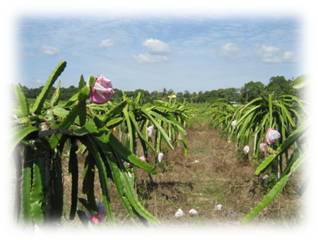 The Red Fruit variety will be used in the pitaya production. It will be planted on the second month of the year and the first harvesting will be on the last month of the year. The pitaya lifespan is around 20 to 25 years.
3) Sweet Corn
 The Thai Supersweet variety will be used in the sweet corn production. There will be 3 cycles in a year and will be harvested 68 to 72 days after planting.
 The Thai Supersweet variety will be used in the sweet corn production. There will be 3 cycles in a year and will be harvested 68 to 72 days after planting.
4) Lemon Grass
 The Peha Ayam variety will be used in the lemongrass production. It will be planted on the second month of the year and the harvesting will be done 6 to 8 months after planting.
 The Peha Ayam variety will be used in the lemongrass production. It will be planted on the second month of the year and the harvesting will be done 6 to 8 months after planting.
The detailed crop and production calendar per crop is on the attached Annexes Nos. 1-5.
Criteria of selection were based on the farmers’ expertise, farmers’ standing capital, fair price, availability of inputs and other resources.
The farmers will utilize traditional and more advanced technologies to produce mushroom, pitaya, sweet corn and lemon grass.
Criteria of selection were based on the farmers’ expertise, farmers’ standing capital, fair price, availability of inputs and other resources.
The farmers will utilize traditional and more advanced technologies to produce mushroom, pitaya, sweet corn and lemon grass.
IV. FINANCIAL RESOURCES
The commercial farming project will be financed by the farmers and any financing institutions. The farmers will contribute 20% of the total project cost and 80% will be loaned from any financing institution.
V. FINANCIAL ANALYSIS
Table 1 is the master cashflow for the four (4) type of commodity (mushroom, pitaya, sweet corn and lemon grass) in five-year term shows that the total gross income is expected at RM 1,768,560.42 and the total cost of production is RM 953,247.21. The farmers can get a total net farm income of RM 815,313.21. This business plan shows that for every ringgit spent on the project, RM 0.86 will be earned. The Net Present Value (NPV) at 10% is RM 596,338.59.
Analysis for Mushroom
Table 2 is the cashflow of mushroom production covering 240,0000 bags or 0.40 hectare. There are 2 cycles in a year for the production of mushroom. The total production cost in a year is about RM 139,147.14 and the gross income in a year is RM 240,000.00 resulting to RM 100,852.86 net income. The return on investment is 1.72.
Analysis for Pitaya
Table 3 is the cashflow of pitaya production covering 0.80 hectare. The total production cost for 5 years is about RM 170,256.60. It is only on the second year the farmers can earn from pitaya production. A total net income of P5,167.00 will be get on the second year and increase every year. The return on investment is 0.72.
Analysis for Sweet Corn
Table 4 is the cashflow of sweet corn production covering 0.80 hectare. There are 3 cycles in a year for the production of sweet corn. The total production cost in a year is about RM 8,851.48 and the gross income in a year is RM 36,000.00 resulting to RM 27,148.52 net income. The return on investment is 0.25.
Analysis for Lemon Grass
Table 5 is the cashflow of lemon grass production covering 0.80 hectare. There is 1 cycle in a year for the production of lemon grass. The total production cost in a 2009 (Year 1) is about RM 5,207.53 and the gross income in a year is RM 30,352.08 resulting to RM 25,144.56 net income. The return on investment is 0.20.
SENSITIVITY ANALYSIS
Based on the sensitivity analysis of various decrease and increase rate in the production (yield) and production cost (Tables 6 to 11), show that even in the worst scenario at 20% decrease on the production and 20% increase on the production cost, the farmers will still earn an income for the commercial farming of four types of commodity (mushroom, pitaya, sweet corn and lemon grass) in five-year term. The total gross income is expected at RM 1,412,420.17 and the total cost of production is RM 1,143,950.07. The farmers can get a total net farm income of RM 268,470.01. This business plan shows that for every ringgit spent on the project, RM 0.23 will be earned. The Net Present Value (NPV) at 10% is RM 183,248.50.
a) If 10% Decrease on the Production (Yield)
Table 6 shows that even the production (yield) decrease by 10%, the group farmers will still earn an income for the commercial farming of four (4) types of commodity (mushroom, pitaya, sweet corn and lemon grass) in five-year term. It shows that the total gross income is expected at RM 1,591,704.38 and the total cost of production is RM 953,247.21. The farmers can get a total net farm income of RM 638,457.17. This business plan shows that for every ringgit spent on the project, RM 0.67 will be earned. The Net Present Value (NPV) at 10% is RM 463,813.13.
b) If 10% Increase on the Production Cost
Table 7 shows that even the production cost increase by 10%, the group farmers will still earn an income for the commercial farming of four (4) types of commodity (mushroom, pitaya, sweet corn and lemon grass) in five-year term. It shows that the total gross income is expected at RM 1,765,525.21 and the total cost of production is RM 1,048,620.90. The farmers can get a total net farm income of RM 716,904.32. This business plan shows that for every ringgit spent on the project, RM 0.68 will be earned. The Net Present Value (NPV) at 10% is RM 520,643.19.
c) If 10% Decrease on the Production (Yield) + 10% Increase on the Production Cost
Table 8 shows that even the production (yield) decrease by 10% and production cost increase by 10%, the group farmers will still earn an income for the commercial farming of four (4) types of commodity (mushroom, pitaya, sweet corn and lemon grass) in five-year term. It shows that the total gross income is expected at RM 1,588,972.69 and the total cost of production is RM 1,048,620.90. The farmers can get a total net farm income of RM 540,351.80. This business plan shows that for every ringgit spent on the project, RM 0.52 will be earned. The Net Present Value (NPV) at 10% is RM 388,393.67.
d) If 20% Decrease on the Production (Yield)
Table 9 shows that even the production (yield) decrease by 20%, the group farmers will still earn an income for the commercial farming of four (4) types of commodity (mushroom, pitaya, sweet corn and lemon grass) in five-year term. It shows that the total gross income is expected at RM 1,412,420.17 and the total cost of production is RM 953,291.72. The farmers can get a total net farm income of RM 459,128.45. This business plan shows that for every ringgit spent on the project, RM 0.48 will be earned. The Net Present Value (NPV) at 10% is RM 329,039.78.
e) If 20% Increase on the Production Cost
Table 10 shows that even the production cost increase by 20%, the group farmers will still earn an income for the commercial farming of four (4) types of commodity (mushroom, pitaya, sweet corn and lemon grass) in five-year term. It shows that the total gross income is expected at RM 1,765,525.21 and the total cost of production is RM 1,143,950.07. The farmers can get a total net farm income of RM 621,575.14. This business plan shows that for every ringgit spent on the project, RM 0.54 will be earned. The Net Present Value (NPV) at 10% is RM 447,747.55.
f) If 20% Decrease on the Production (Yield) + 20% Increase on the Production Cost
Table 11 shows that even the production (yield) decrease by 20% and production cost increase by 20%, the group farmers will still earn an income for the commercial farming of four (4) types of commodity (mushroom, pitaya, sweet corn and lemon grass) in five-year term. It shows that the total gross income is expected at RM 1,412,420.17 and the total cost of production is RM 1,143,950.07. The farmers can get a total net farm income of RM 268,470.10. This business plan shows that for every ringgit spent on the project, RM 0.23 will be earned. The Net Present Value (NPV) at 10% is RM 183,248.50.
VI. MARKETING PLAN
The farmers group will continue to service the existing C & C Company for the supply of mushroom. The target customers for the entire fresh product harvested from the farm are vegetable & fruit processors and private individual buyers through direct selling and farmers markets. Farmers Group will initially market and supply its products to target customers. The farmers group plans to use the internet as one of its marketing channels. To this extent, the farmers group further would like to set up a website to market its products.
The farmers group target customers will be as follows:
Mushroom:
· C & C Company
· Wholesaler
· Mushroom processors
· Food outlets
· People approaching the farm
· Roadside stands and farmers' markets
Pitaya, Sweet Corn and Lemon Grass:
· Wholesaler
· Pitaya, sweet corn and lemon grass processors
· Food outlets
· People approaching the farm
· Roadside stands and farmers' markets
· Wholesaler
· Pitaya, sweet corn and lemon grass processors
· Food outlets
· People approaching the farm
· Roadside stands and farmers' markets
The farmers group will set a grading system for the produced mushroom, pitaya, sweet corn and lemon grass in order to get high price and attract more customers.
The supply of mushroom is available for the months of April to 1st week of July and October to 1st week of January; supply of pitaya will be available on December and year onwards; supply of sweet corn is available on the months of April to May, September and January; and supply of lemon grass on the month of September.
The farmers group will utilize aggressive advertising strategies to further market its products like promotion of products through the sponsoring of cooking shows and exhibitions using the mushroom, pitaya, sweet corn and lemon grass.
VII. PROJECT MANAGEMENT
Farmers Group's management team is led by Mr. Mat Ali Bin Hamid as Business Manager, who has extensive knowledge of the mushroom industry. The farmers group expects to employ seven (7) permanent employees and contractual employees/hired laborers.
The Farmers Group team is organized into three groups:
Management
Management will be responsible for supervising and participating in the daily operations of the facility. Management consists of:
· Mat Ali Bin Hamid, Business Manager
· Wahid Bin Taaf, Asst. Business Manager
· Yahid Mohd Dan, Secretary
· Mohd Amin Ahmad, Treasurer
Daily Maintenance
This group will consist of the following:
· Mohd Nazri Mohd Dan, Operation Supervisor
· Ayub Hj. Daud, Marketing Supervisor
· Burhan Bin Dewa, Field Supervisor
Contract Personnel/Hired Laborer
Contract personnel and/or hired laborers will be utilized for the preparation of media for mushroom and land preparation, planting, maintenance and harvesting of pitaya, sweet corn and lemon grass.
VIII. CONCLUSION
The business plan for the commercial farming project of the four (4) types of commodity (mushroom, pitaya, sweet corn and lemon grass) in the five-year term is a profitable one, even in the worst scenario at 20% decrease on the production (yield) and 20% increase on the production cost. This kind of endeavor is acceptable and the risk is manageable.
PREPARE BUSINESS PLAN.... TO SHOW PRODUCTIVITY...
FOLLOW BUSINESS PLAN.... NEED REGULAR REVISION...
CHECK THE PLANNING.... ENSURE THE PROFIT....
READ TO STUDY BUSINESS PLAN....
By
M Anem
MTCP Lecturer
Serdang


